
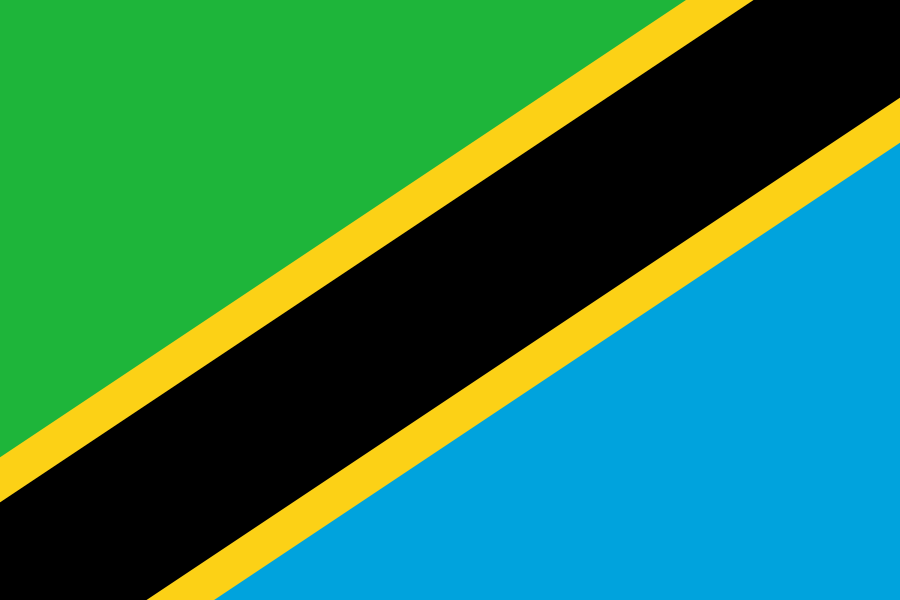
Governance & legal system
The United Republic of Tanzania actively participates in several regional governmental organizations that influence refugee affairs:
- African Union (AU): Tanzania is a member of the AU, which has established frameworks like the 1969 OAU Convention Governing the Specific Aspects of Refugee Problems in Africa. This convention expands the definition of refugees and emphasizes the importance of granting asylum and finding durable solutions.
- East African Community (EAC): As a founding member of the EAC, Tanzania collaborates with neighboring countries to address refugee issues. The Treaty for the Establishment of the East African Community includes provisions for establishing common mechanisms for managing refugees, promoting regional cooperation in handling refugee matters.
- Southern African Development Community (SADC): Tanzania's membership in SADC involves commitments to regional stability and development, indirectly affecting refugee affairs by addressing root causes of displacement and promoting peace and security in the region.
The United Republic of Tanzania adheres to a dualist system concerning the application of international law. In a dualist framework, international treaties and agreements do not automatically become part of domestic law upon ratification; instead, they require specific legislative action to be incorporated and thus enforceable within the national legal system.
Under Tanzania's current constitutional arrangement, international treaties must undergo a formal domestication process to acquire the force of law within the country. This means that after the executive branch ratifies an international treaty, the Tanzanian Parliament must enact corresponding legislation to transform the treaty's provisions into national law. Without such legislative action, the treaty's stipulations hold no legal authority domestically.
This dualist approach underscores the separation between international obligations and domestic legal applicability, ensuring that international commitments are scrutinized and approved through the national legislative process before affecting the rights and duties of individuals within Tanzania. Consequently, for international law to be operational within Tanzania, it must be explicitly adopted through domestic legislation, reflecting the country's adherence to the dualist doctrine.
The United Republic of Tanzania is a unitary presidential democratic republic with a unique dual governance structure that integrates both centralized and semi-autonomous governance. The President of Tanzania serves as both the head of state and government, wielding executive power over the entire country, including Zanzibar. The Union Government is responsible for national affairs, including defense, foreign affairs, and immigration, while Zanzibar, a semi-autonomous region, has its own President, legislature (House of Representatives), and judiciary, allowing it to govern non-union matters such as local policies, education, and trade. This arrangement stems from the 1964 Union Agreement between Tanganyika and Zanzibar, forming the modern Tanzanian state. Although unitary in structure, the Zanzibar government operates with considerable autonomy, making Tanzania’s governance system somewhat unique in the African political landscape.
Tanzania’s legislative branch consists of a unicameral National Assembly (Bunge), whose members are selected through a mixed electoral system, combining direct elections, presidential appointments, special seats reserved for women to enhance gender representation, and representatives from Zanzibar’s House of Representatives. While the National Assembly legislates for the entire country, the Zanzibar House of Representatives independently governs the region’s internal affairs, excluding union matters. The judiciary is constitutionally independent, with the Court of Appeal of Tanzania as the highest judicial authority, having jurisdiction over both the mainland and Zanzibar. Below it, the High Court of Tanzania and the High Court of Zanzibar function separately for their respective regions, while lower courts, such as magistrate courts and district courts, handle civil and criminal cases nationwide.
Administratively, Tanzania is divided into 31 regions, each overseen by Regional Commissioners appointed by the President. The regions are further divided into districts, divisions, and wards, with local governments managed through elected councils and appointed executive officers. While local governance exists, the central government retains substantial authority over decision-making, particularly in finance and security. The ruling party, Chama Cha Mapinduzi (CCM), has historically dominated Tanzanian politics, shaping policy and governance since the country’s independence. Despite periodic multiparty elections, the political landscape is often tilted in favor of the ruling party, with opposition parties facing legal and political challenges.
One of the defining characteristics of Tanzania’s governance is the delicate balance between union unity and Zanzibar’s autonomy. While the central government maintains authority over critical national issues, tensions occasionally arise regarding the extent of Zanzibar’s self-governance, with calls for greater autonomy from Zanzibari political movements. Additionally, the legal system’s dual nature—incorporating both common law and Islamic law in Zanzibar’s judicial framework—further distinguishes the governance of the region from mainland Tanzania.
Overall, Tanzania’s unitary system, with a strong presidential executive and a semi-autonomous Zanzibar, represents a hybrid governance model that combines centralized authority with decentralized decision-making in specific areas. While it remains formally unitary, the existence of parallel institutions in Zanzibar, along with regionally structured administration, gives the country a distinctive political and legal framework that continues to evolve with changing political dynamics and governance challenges.
The United Republic of Tanzania operates under a plural legal system that integrates English common law, customary law, and Islamic law, reflecting its colonial history, cultural diversity, and the unique governance arrangement with Zanzibar. Common law forms the foundation of the legal system, inherited from British colonial rule through the Tanganyika Order in Council of 1920, which established the legal framework and judiciary based on English legal principles. Despite this, customary law remains highly influential, particularly in rural areas, where it governs matters such as land tenure, family relations, and inheritance. The recognition of customary law is subject to statutory limitations, ensuring that it does not contravene principles of justice or morality. Additionally, Islamic law (Sharia) plays a significant role, especially in Zanzibar, where Kadhi’s Courts adjudicate personal and family law matters among the Muslim population, particularly regarding marriage, divorce, and inheritance. These courts function parallel to the secular judiciary, reflecting the semi-autonomous status of Zanzibar within the union. The judiciary is structured hierarchically, with the Court of Appeal serving as the highest judicial authority, overseeing both mainland Tanzania and Zanzibar to maintain legal consistency. Below this, the High Court of Tanzania and the High Court of Zanzibar exercise jurisdiction over serious civil and criminal matters within their respective territories. Lower courts, including Primary Courts, District Courts, and Resident Magistrate Courts, handle less severe cases on the mainland, while in Zanzibar, both secular and Islamic courts coexist. Despite legal reforms aimed at harmonizing these diverse legal traditions, tensions remain, particularly where customary and religious laws conflict with statutory provisions and international human rights norms. Legal pluralism in Tanzania, while recognizing and respecting its diverse cultural and religious heritage, presents challenges in ensuring uniform application of justice. Ongoing legal reforms continue to address discrepancies, striving to balance tradition with modern legal principles, making Tanzania’s system one of the most legally diverse in East Africa.
The Judiciary of Tanzania operates under a hierarchical structure designed to administer justice across both Mainland Tanzania and the semi-autonomous region of Zanzibar. At the apex is the Court of Appeal of the United Republic of Tanzania, established under Article 108 of the 1977 Constitution. This court serves as the final appellate body for both Mainland Tanzania and Zanzibar, ensuring uniformity in legal interpretations across the union.
Beneath the Court of Appeal are the High Courts, each possessing unlimited original jurisdiction over civil and criminal matters within their respective territories. The High Court of Tanzania caters to Mainland Tanzania and is organized into specialized divisions, including the Commercial, Labour, and Land Divisions, to expedite cases in these specific areas. It operates through 14 regional sub-registries, with the main registry located in Dar es Salaam. Conversely, the High Court of Zanzibar functions independently, handling cases pertinent to the Zanzibar archipelago.
Subordinate to the High Courts are the Resident Magistrates Courts and District Courts, which share concurrent jurisdiction and primarily handle appeals from the lowest tier, the Primary Courts. These Primary Courts are the foundational level of the judiciary, dealing with customary, civil, and criminal cases. In Zanzibar, the judicial system uniquely incorporates Kadhi's Courts, which adjudicate matters of Islamic family law, such as marriage, divorce, and inheritance, applicable exclusively to Muslims.
The judiciary maintains independence from the executive and legislative branches, as enshrined in the Constitution, to uphold the rule of law and ensure impartial justice. Judges of the Court of Appeal and the High Courts are appointed by the President, while those in subordinate courts are appointed by the Chief Justice.
Additionally, Tanzania participates in regional judicial mechanisms, notably the East African Court of Justice (EACJ), which adjudicates matters pertaining to the East African Community (EAC) treaty. The EACJ ensures adherence to law in the interpretation and application of the EAC treaty, with its decisions taking precedence over national courts on similar matters.
In the United Republic of Tanzania, the implementation of refugee rights legislation is managed through a multi-tiered institutional framework comprising central, sub-central, and local government entities that ensure policies are effectively executed across different levels of governance. At the central level, the Ministry of Home Affairs (MoHA), through its Refugee Services Department, is the primary institution responsible for overseeing refugee affairs, implementing the Refugees Act of 1998 and the National Refugee Policy of 2003. MoHA works in collaboration with UNHCR and other humanitarian organizations to manage refugee protection, regulate refugee settlements, and oversee the security and administration of refugee-hosting areas. Within MoHA, the National Eligibility Committee (NEC) plays a key role in the Refugee Status Determination (RSD) process, assessing asylum applications and making recommendations to the Minister of Home Affairs, who holds the final decision-making authority on granting or denying refugee status. If an asylum application is rejected, the applicant can request a review, but no independent appeal mechanism exists beyond the Ministry’s internal review process.
At the sub-central level, Regional Administrative Secretaries (RAS) act as key intermediaries between the central government and local authorities in regions that host refugees, such as Kigoma Region, where the majority of refugees are settled in Nyarugusu, Nduta, and Mtendeli camps. These officials oversee regional coordination of refugee services, ensure alignment with national policies, and facilitate the work of international organizations, NGOs, and civil society actors providing humanitarian assistance. Regional authorities work closely with MoHA and UNHCR to ensure that refugee settlements adhere to national security policies while maintaining international protection standards.
At the local level, District and Local Government Authorities play a direct role in refugee management and service delivery, particularly in districts hosting refugee camps or long-term refugee settlements. District Commissioners, appointed by the President, oversee refugee-related activities within their jurisdictions, ensuring that local policies do not contradict national refugee laws. District Councils, composed of elected representatives, work alongside village and ward administrators to manage land use, infrastructure development, health services, and education within refugee-hosting communities. Local authorities are responsible for ensuring law and order within refugee camps, often coordinating with security forces and law enforcement agencies to address crime, enforce curfews, and handle disputes between refugees and host communities. Moreover, village elders and customary leaders play a role in conflict resolution and social integration efforts, particularly in areas where refugees live alongside local populations outside formal camp settings.