
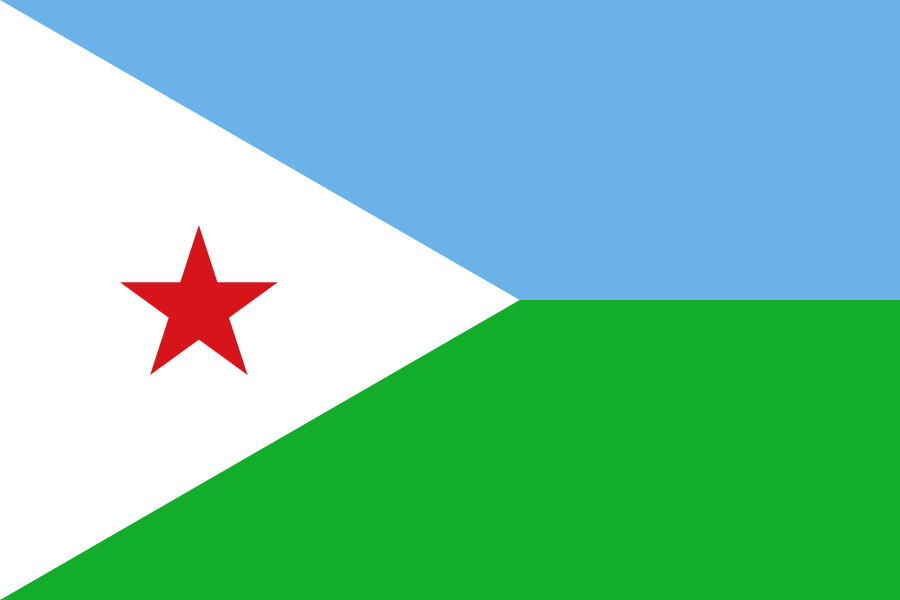
Governance & legal system
The Republic of Djibouti is a member of several key regional organizations that significantly influence refugee policies and affairs:
Since its accession to independence in 1977, Djibouti has been an active member of the LAS. In 2015, the LAS established the Arab Regional Consultative Process on Migration and Refugee Affairs (ARCP), a platform designed to facilitate discussions on international migration issues and enhance regional cooperation. The ARCP focuses on crucial topics such as asylum, forced displacement, migrants' rights, and integration. Djibouti actively engages in these discussions and is committed to implementing the recommendations put forth by the ARCP.
As a founding member of IGAD, a regional organization in the Horn of Africa established in 1996, Djibouti plays a key role in shaping the organization's policies. In March 2017, IGAD member states, including Djibouti, adopted the Nairobi Declaration on the Protection and Integration of Refugees, showcasing Djibouti's dedication to improving the lives of refugees. This declaration outlines concrete actions in the areas of protection, education, socio-economic integration of refugees, and responsibility-sharing at the regional level. Djibouti's commitment to IGAD is further demonstrated by its hosting of several important IGAD conferences.
As a member state of the AU, formerly known as the Organization of African Unity, Djibouti has ratified two critical conventions: the 1969 OAU Convention Governing the Specific Aspects of Refugee Problems in Africa and the 2009 Kampala Convention on the Protection and Assistance of Internally Displaced Persons in Africa. These instruments establish legal obligations for the protection of refugees, particularly in terms of defining refugee status, granting asylum, and providing legal protection. Djibouti has successfully integrated these regional standards into its national legal framework.
In addition, the Republic of Djibouti maintains a close partnership with the United Nations High Commissioner for Refugees (UNHCR) to implement effective refugee-related policies. Djibouti was among the first countries to adopt the Comprehensive Refugee Response Framework (CRRF) in 2017, which emerged from the 2016 New York Declaration for Refugees and Migrants. The CRRF provides a comprehensive and innovative approach to refugee response, focusing on their inclusion in national education and health systems, improving their self-reliance, and strengthening local and national capacities. The UNHCR provides technical, financial, and capacity support to Djibouti to facilitate the integration of refugees. Major initiatives include the signing of a Memorandum of Understanding for refugee education in August 2017 and their integration into the national health system in January 2018. Furthermore, the Djibouti Declaration, adopted during a high-level meeting, demonstrates the country's commitment to improving access to education for refugees, in partnership with the UNHCR.
The Republic of Djibouti, through Article 70 of its Constitution, aligns with the monist doctrine, granting primacy to the Constitution while imposing specific conditions for the superiority of treaties over national legislation.
The President plays a pivotal role in the conduct of foreign policy, holding the exclusive authority to negotiate and approve international treaties prior to ratification by the National Assembly. This demonstrates a system of separation of powers, wherein the executive branch initiates and directs treaty policy, while the legislative branch ratifies these commitments, thereby ensuring democratic oversight.Once ratified and promulgated, treaties possess an authority that supersedes domestic legislation. This monist provision establishes that international commitments take effect within the domestic legal order without requiring implementing legislation. This confers a degree of fluidity and efficiency in the application of international law, which is essential for international cooperation and the uniform implementation of international norms. The application of treaties is contingent upon their reciprocal execution by the other party and their compliance with the law of treaties. This reciprocity clause ensures that Djibouti is not unilaterally bound if the other party fails to fulfill its obligations, which is a reasonable precaution and a common practice in international law. The final sentence of the article emphasizes the supremacy of the Constitution of Djibouti. No treaty containing provisions contrary to the Constitution can be ratified without prior constitutional amendment. This safeguards the normative hierarchy and the integrity of Djibouti's legal order by preventing conflicts between constitutional norms and international obligations.
The Constitution of the Republic of Djibouti, dated September 15, 1992, establishes a unitary system of governance. Article 1 proclaims Djibouti as a unitary republic, thereby centralizing authority at the national level. This centralization is further reinforced by Article 2, which upholds the inviolability of national borders - a fundamental trait that distinguishes unitary systems from federal systems.
As per Article 4, national sovereignty is vested in the people and exercised either directly or through elected representatives, without the involvement of federal intermediaries. Article 6, on political parties, emphasizes the importance of upholding national sovereignty and democracy, implying a political landscape devoid of federal divisions. Correspondingly, Article 7 defines the role of the President as the head of state, reflecting the centralized executive power that is emblematic of unitary systems.
With regards to the legislative branch, Article 20 designates the unicameral National Assembly as the sole repository of legislative authority, with no mention of regional legislatures. Moreover, Articles 21 and 22, which delineate the eligibility criteria and status of the Assembly, do not refer to regional representation, further underscoring the centralized nature of the legislative branch.
Articles 29 through 39 outline a government that operates under the authority of the President and is accountable to the National Assembly, signifying a unified and centralized executive. The roles and responsibilities of the Prime Minister and the cabinet, as detailed in these articles, further reinforce this centralization.
In the realm of the judiciary, Articles 40 to 46 establish an independent yet centralized judicial system, which stands in contrast to federal systems where autonomous jurisdictions exist at various levels.
Articles 49 to 69, which encompass the legislative process, financial oversight, and sessions of the National Assembly, all reflect the centralized administration of state affairs at the national level.
Finally, articles from 70 onward address a range of areas, including the budget, education, public health, and the protection of rights, all of which are managed in a centralized manner with minimal involvement from regional entities.
Djibouti's Constitution codifies a pluralistic legal system that seamlessly integrates civil law, Islamic law, and potentially customary law traditions.
Article 1 establishes Islam as the state religion, potentially influencing the legal framework through the incorporation of Islamic jurisprudence, particularly in matters of personal status. Additionally, it upholds the principles of democracy, unity, equality, peace, and respect for all beliefs. The official languages, Arabic and French, reflect Djibouti's civil law heritage, exemplified by the influential French legal system. Articles 2, 5, and 10 reinforce the rule of law and equality before the law. Article 2 suggests the existence of codified legislation governing sovereign aspects such as national symbols. Article 5 indicates a codified electoral code defining citizens' voting rights. Article 10 safeguards freedom of expression while allowing for legal limitations, aligning with the civil law approach of delineating individual liberties through statutory provisions. Articles 71 to 77 provide a comprehensive framework for the judiciary's organization, crucial for understanding the legal system's structure. Article 71 upholds judicial independence from the legislative and executive branches, a cornerstone principle of civil law systems. Subsequent articles elucidate the Supreme Court's composition, judicial appointment processes, guarantees of judicial independence, and the prohibition of executive interference in judicial matters. Articles 90 and 91 highlight the strong civil and commercial legal framework. Article 90 establishes the accounting and financial court, entrusted with overseeing public finances, reflecting the separation of powers and executive oversight characteristic of civil law systems. Article 91 mandates the Court of Accounts to assist Parliament and the Government in monitoring the implementation of financial laws, a hallmark of comprehensive tax codes within civil law traditions.
The Republic of Djibouti boasts a well-structured judicial system, as outlined in its Civil Procedure code. The Code establishes a unified judicial structure, integrating various courts and recognizing the coexistence of written and customary law, highlighting a pluralistic legal system (Article L.110-2). It also guarantees access to legal texts for judges and litigants, ensuring transparent and fair application of the law (Article L.110-3). The Court of First Instance exhibits diversity in its composition, with specialized chambers reflecting the variety of cases it handles (Article L.111-1). The court's internal hierarchy is detailed, emphasizing the roles of the President, Vice-President, and Chamber Presidents for effective management (Article L.111-2). Several articles illustrate interactions between courts, such as solemn hearings involving the Court of Appeal (Article L.111-4), close communication and coordination between the Court of First Instance and the Court of Appeal (Article L.111-7), and the Court of Appeal's advisory role in the deliberations of the Court of First Instance (Article L.111-9). The Court of First Instance is administratively subordinate to the Court of Appeal, confirming the clear hierarchy within the judicial system (Article L.111-15). The Supreme Court plays a central role with its specialized chambers handling a wide variety of cases (Articles L.131-1 to L.131-3) and oversees the proper administration of justice through court registry inspections (Article L.155-1). The Administrative Court specializes in administrative matters, acting independently from ordinary courts (Article L.110-2), with Administrative Court judges holding an important status within the judicial hierarchy (Article L.111-19).
The Republic of Djibouti balances tradition and modernity by integrating Islamic law and customary matters into its civil law system. The Personal Status Court, governed by article L.116-1 and operating per Sharia principles, exclusively handles personal status matters. The abolition of customary courts (Article L.800-4) reflects a desire for centralization and modernization, adapting to international legal norms while harmonizing traditional legal practices with a unified, contemporary judicial system.
The Ministry of the Interior, whose role is defined by Article 6 of Decree No. 2021-114/PRE (https://www.presidence.dj/page/attributions-des-ministeres), which outlines the responsibilities of the ministries. This decree is subject to revision and is often amended during government restructurings, reflecting the adaptability and dynamic response of the legal framework to contemporary requirements for managing refugee and disaster-related issues.According to the aforementioned decree, the Ministry of the Interior is vested with the initiative and full responsibility for managing refugees and disaster victims, which constitutes an explicit mandate for the country's internal administration. In addition, the National Office for Assistance to Refugees and Disaster Victims (ONARS), established by Decree No. 78-020/PR (https://www.journalofficiel.dj/texte-juridique/decret-n78-020-pr-portant-creation-dun-comite-national-dassistance-aux-refugies-et-aux-sinistres-ainsi-quun-office-national-charge-de-lexecution-des-mesures-destinees-en-leur-faveur/), acts as a specific executive body designed to translate the policies developed by the Ministry and the National Committee for Assistance to Refugees and Disaster Victims into concrete actions. By virtue of its delegated functions, ONARS is responsible for a multitude of essential operational tasks, ranging from coordinating the reception of refugees to facilitating their integration into Djibouti's social and economic fabric. It is tasked with issuing identity documents, which is crucial for exercising civil rights and accessing services. Moreover, the administration and supervision of refugee camps fall within its purview, ensuring living conditions that adhere to international standards of dignity and security.
Within this institutional framework, ONARS and the Ministry of the Interior closely collaborate with major international actors such as the United Nations High Commissioner for Refugees (UNHCR) and other specialized UN agencies (UNDP, FAO, UNICEF, IOM).